From Seoul to San Francisco: What Korea Teaches Us About User Acquisition
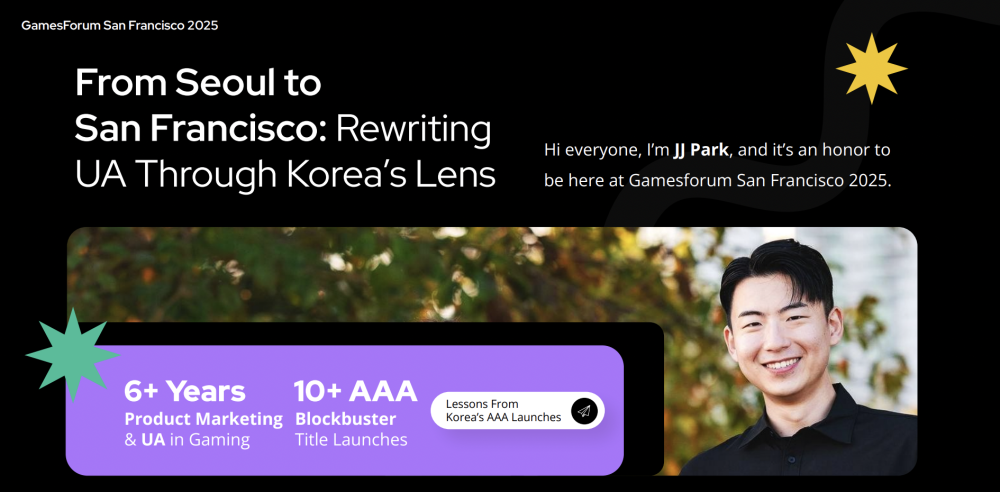
By JJ Park, Product Marketing Manager, 2K
UA playbooks are often treated as universal. In reality, markets behave very differently. Nowhere is that clearer than Korea: one of the most competitive, community-driven gaming ecosystems in the world.
After launching multiple AAA titles in Korea, a few lessons stand out: culture shapes performance, speed matters more than optimisation cycles, and community sentiment can make or break a launch.
Korea Is Not Just Another “Asian UA Market”
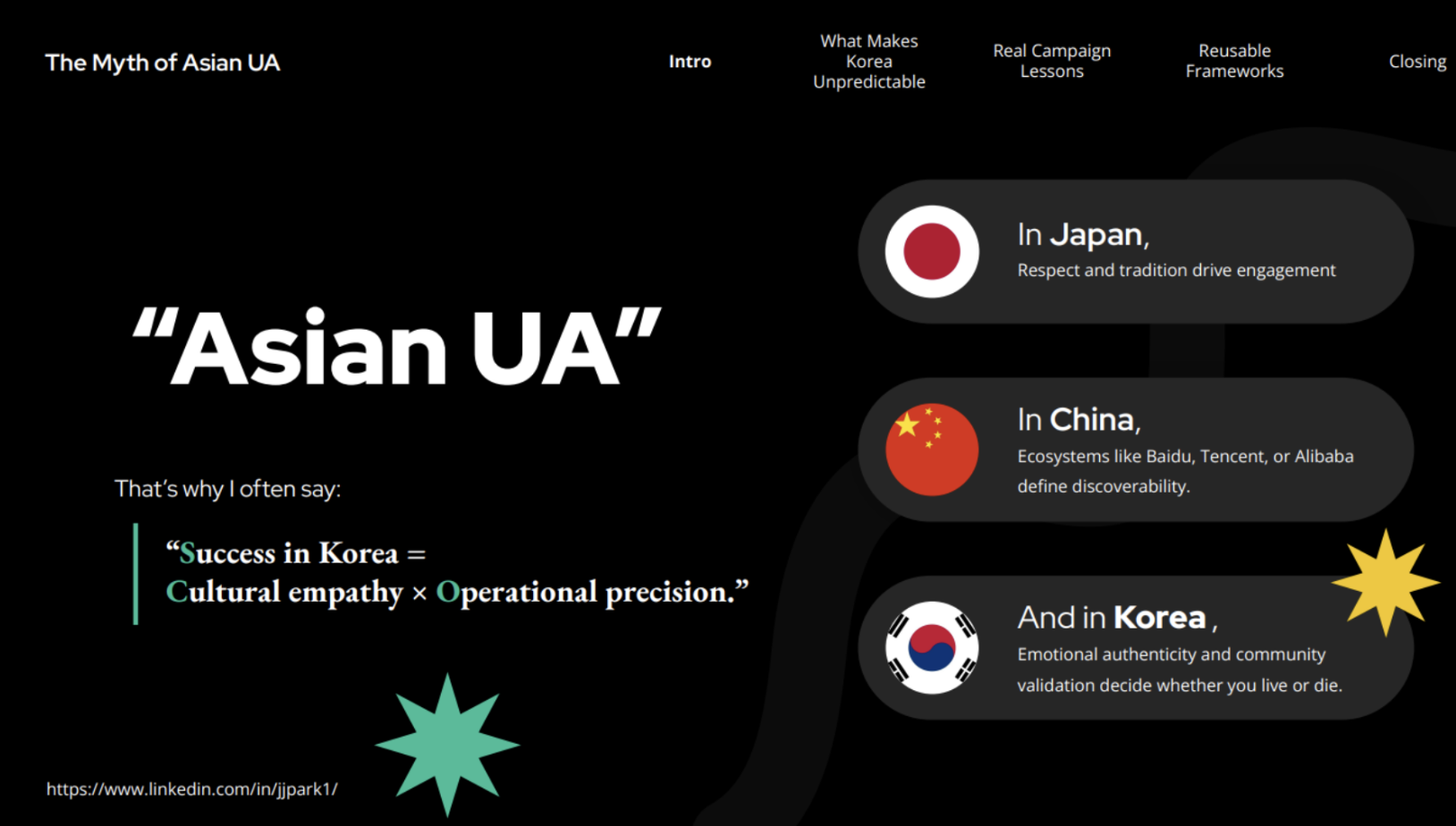
The phrase “Asian UA” often lumps together markets that operate under completely different rules.
- Japan: Engagement driven by tradition and brand trust
- China: Discoverability controlled by large ecosystems like Tencent or Baidu
- Korea: Community sentiment and emotional authenticity dominate success
In Korea, a game succeeds when players feel ownership of the experience. If that trust breaks, backlash can spread quickly across forums, influencers, and communities.
A simple way to summarise the market:
Success in Korea = Cultural empathy × Operational precision.
Korea’s Market Structure Creates Unique UA Challenges
Korea also differs structurally from Western markets.
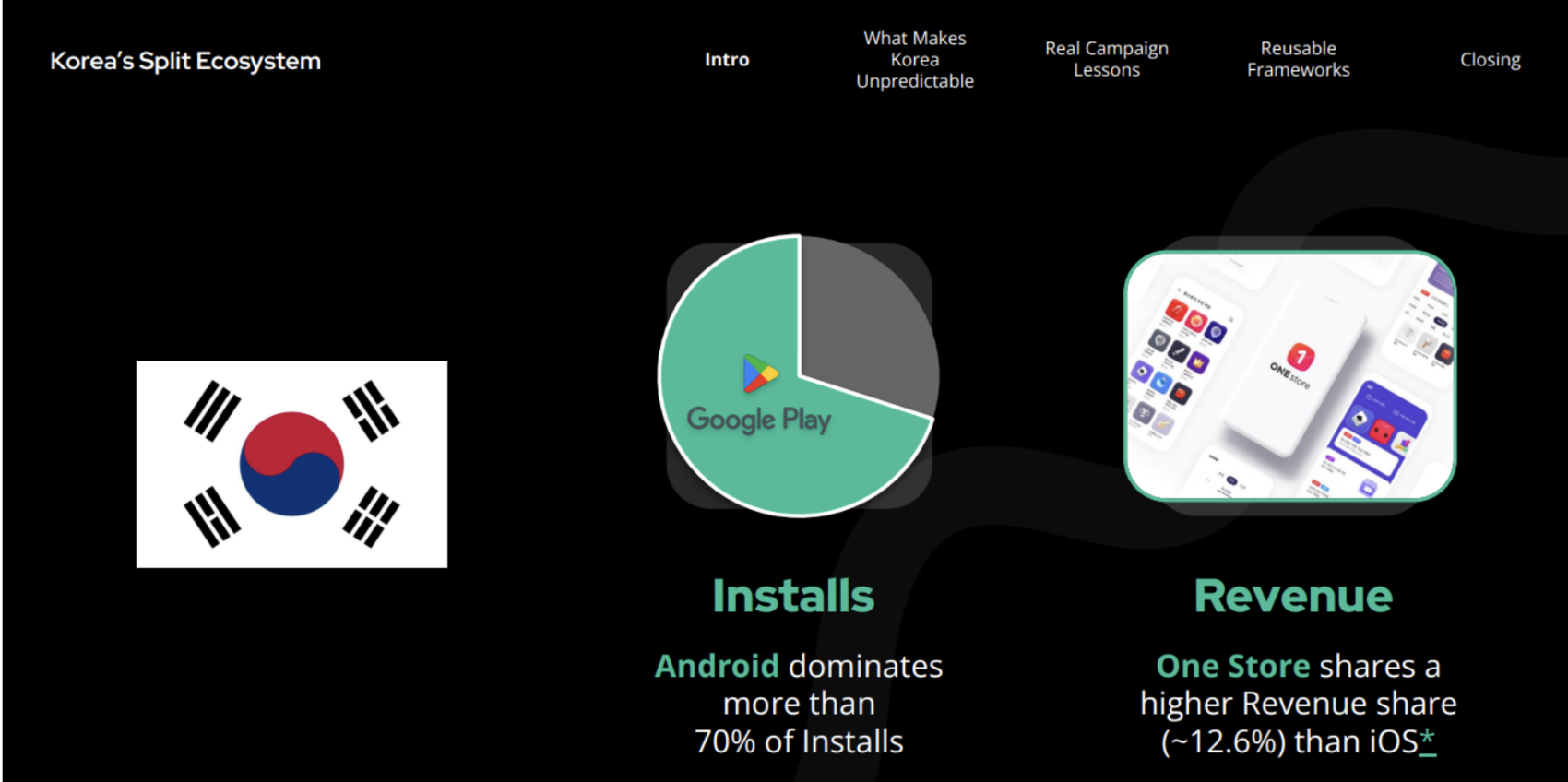
Android dominates installs, but local platforms such as One Store capture a disproportionate share of revenue, making distribution strategies more complex.
On top of that, Korea’s UA environment includes a dense ecosystem of local ad networks and DSPs that often outperform global networks for specific KPIs.
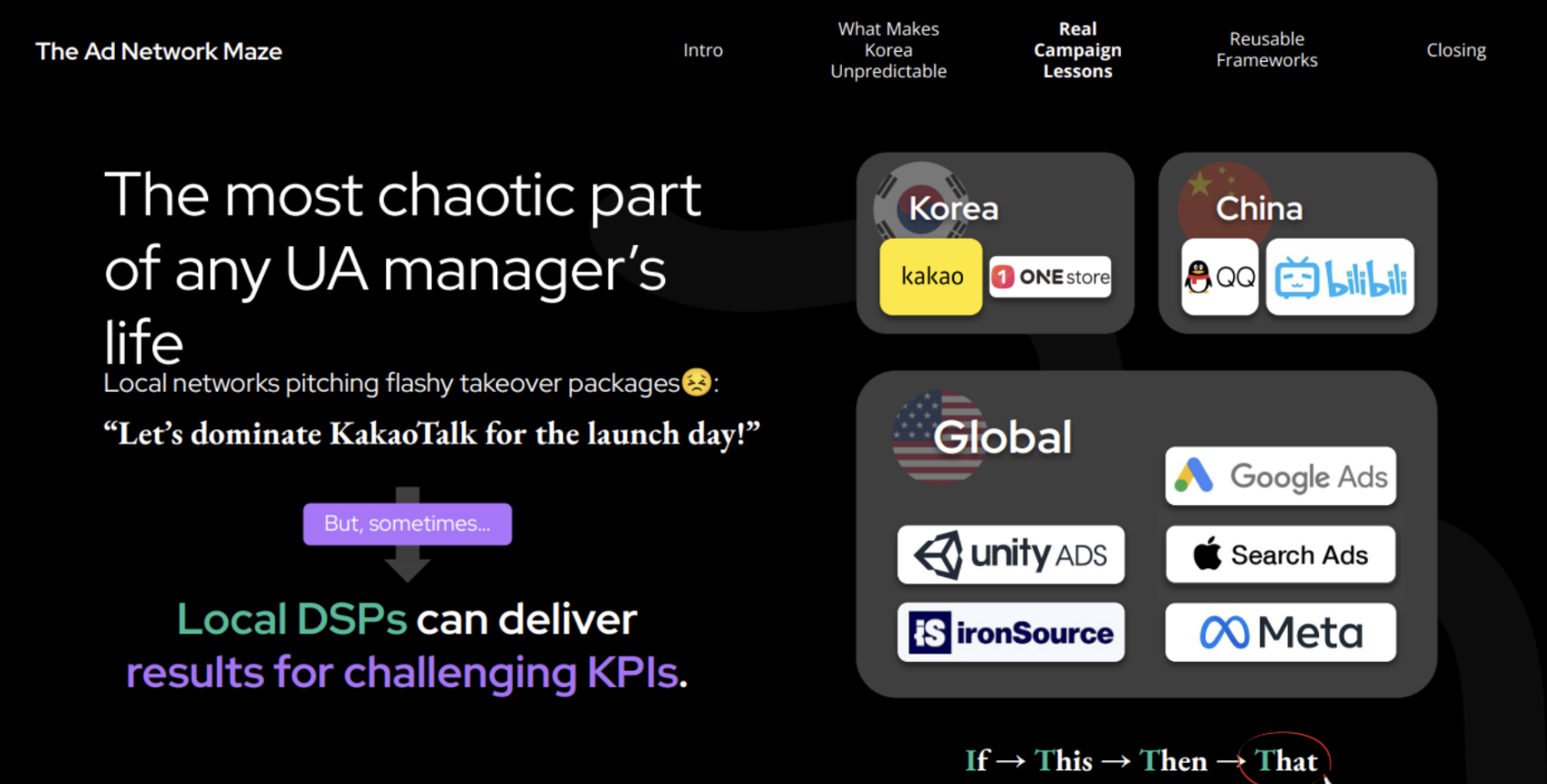
This creates a fragmented acquisition landscape where local partnerships often matter as much as global platforms.
The “Truck Protest” Lesson: Fairness Is Everything
Korean players are highly organised communities. When they feel monetization or balance is unfair, they respond collectively, sometimes literally, by sending protest trucks with LED messages to company headquarters.
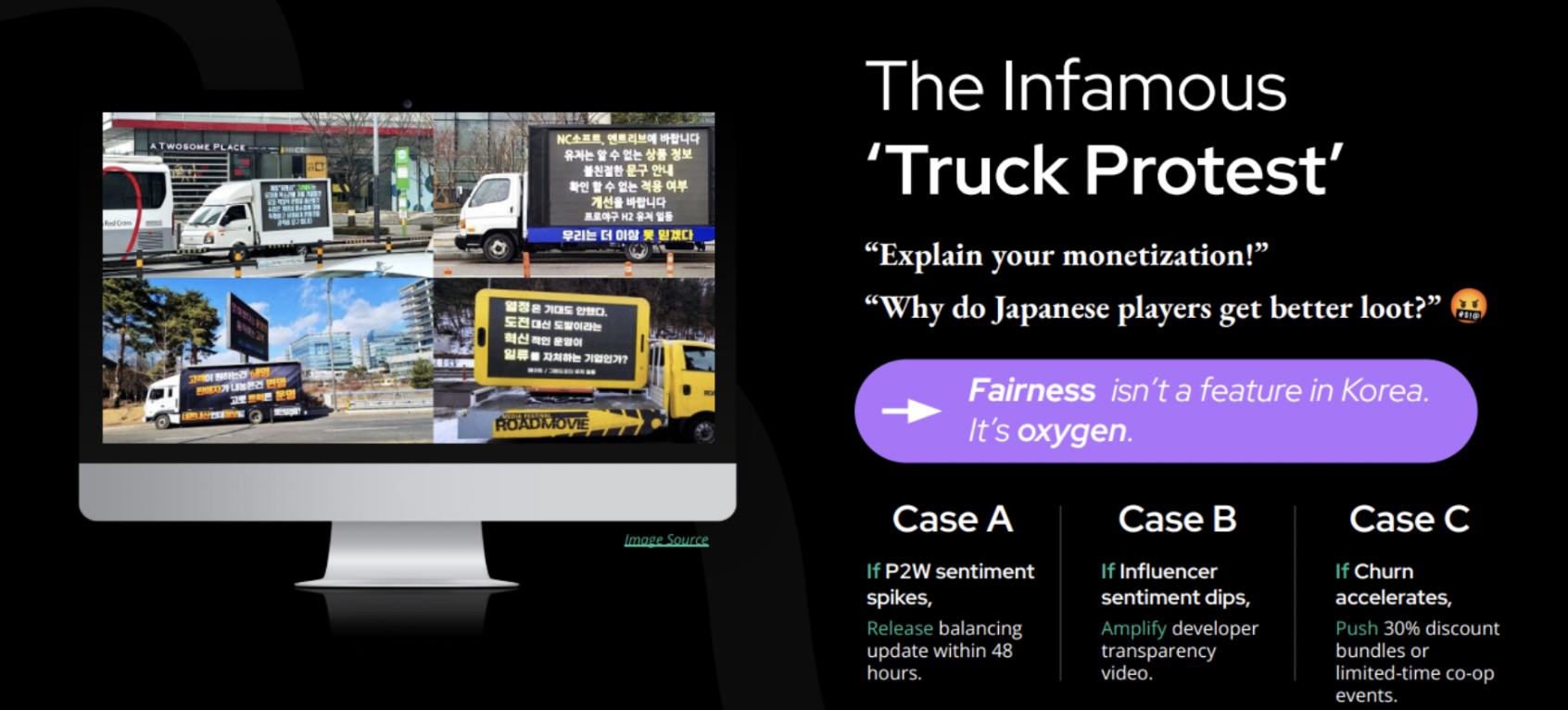
For UA and product teams, this means marketing performance cannot be separated from player sentiment.
Successful teams build rapid-response playbooks, for example:
- If pay-to-win sentiment spikes → release balancing updates within 48 hours
- If influencer sentiment drops → increase developer transparency
- If churn accelerates → deploy value bundles or cooperative events
In Korea, fairness is more than just a feature.
Why Korea Favours the “Go-Big” Launch Model
In Western markets, UA typically follows a flywheel model: start small, let algorithms learn, then scale spend once ROAS stabilises.
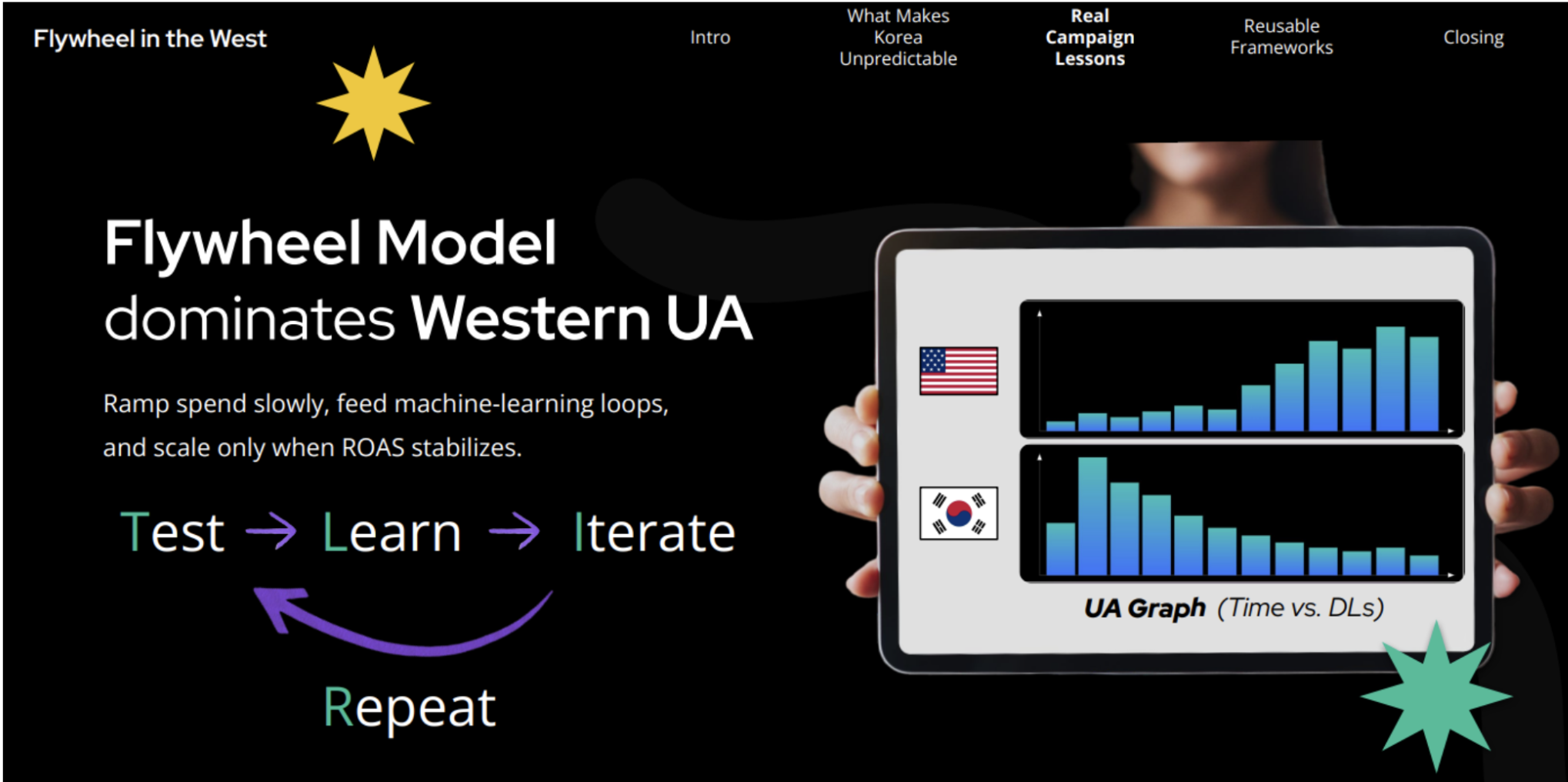
Korea behaves differently.
Major launches often start with large-scale brand marketing, influencer campaigns, and heavy early spend to generate immediate visibility and community momentum.
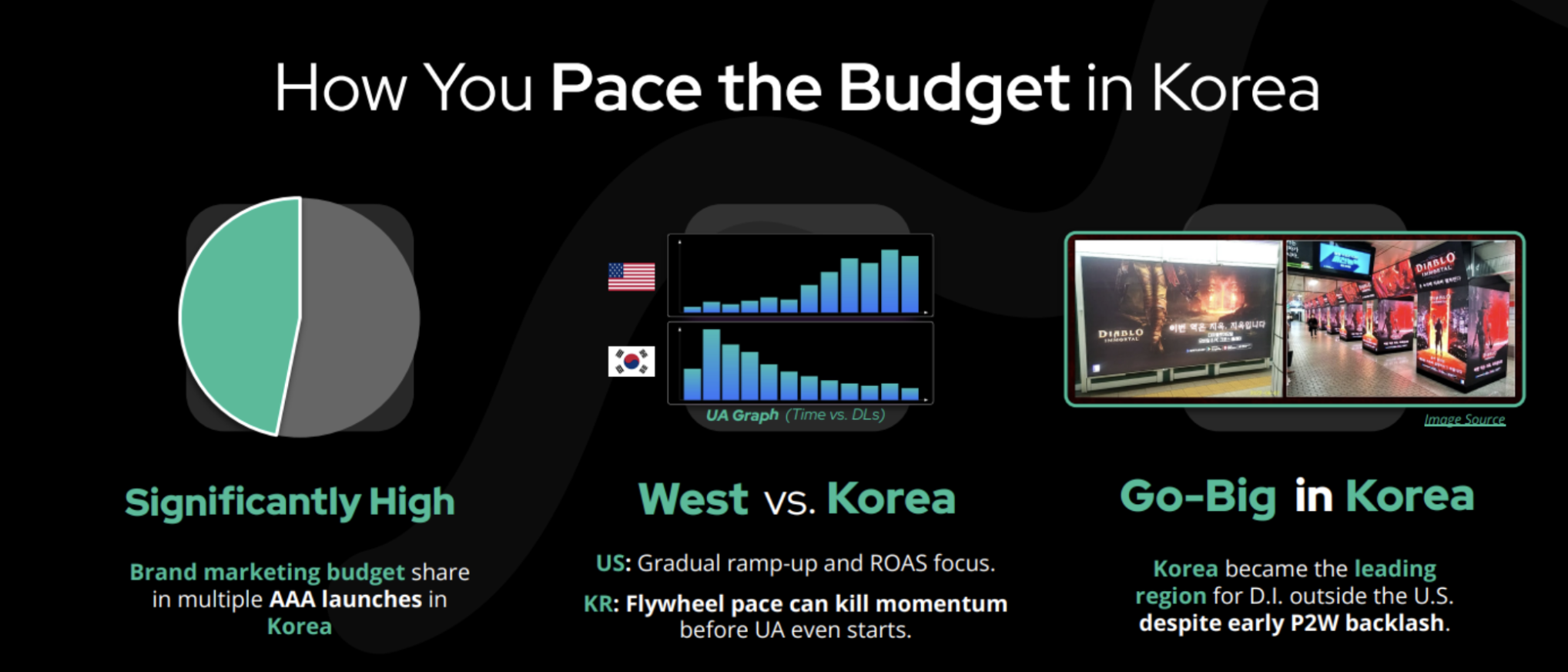
This works because Korean players tend to discover games through groups and communities, not as individuals.
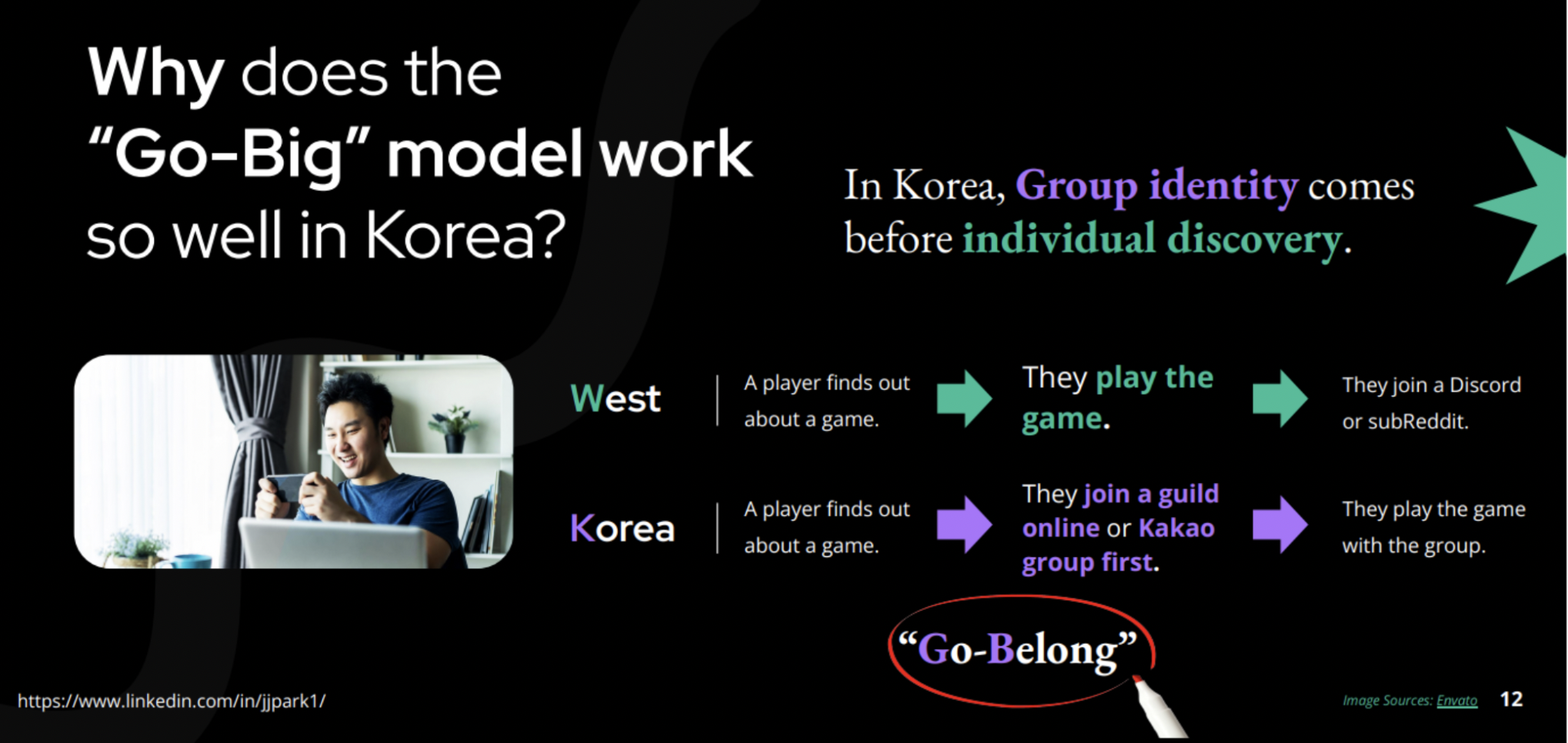
In other words:
Western UA is often Go-Discover.
Korean UA is closer to Go-Belong.
Localisation Is Not Translation
Creative that performs globally may fail completely in Korea.
Localisation requires cultural intuition.
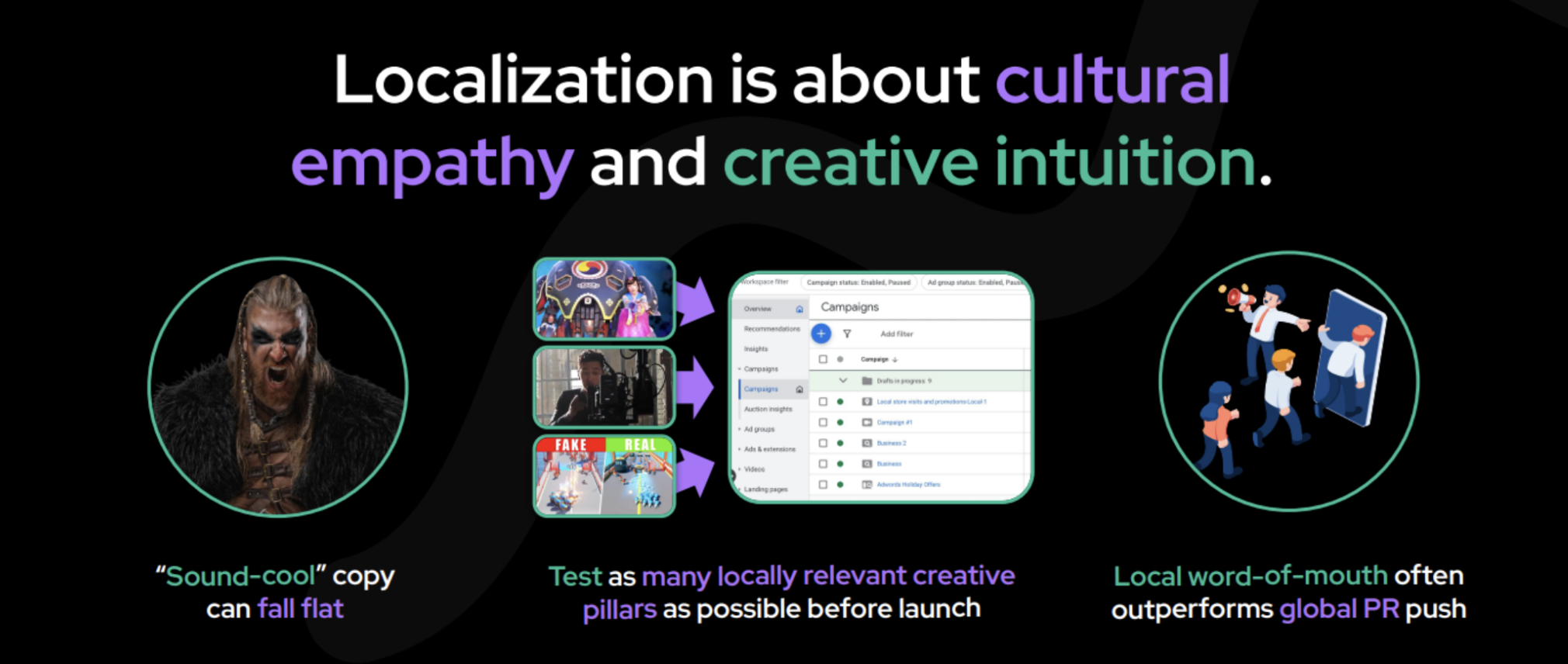
Successful campaigns typically:
- Test dozens (sometimes hundreds) of locally resonant creatives
- Lean on humor, memes, or culturally specific references
- Prioritize word-of-mouth and influencer validation
Local community buzz can outperform large PR pushes.
A Practical UA Framework for Unpredictable Markets
When performance shifts quickly, which often happens in Korea, rigid campaign structures break down.
A useful operational model is simple:
If → This → Then → That
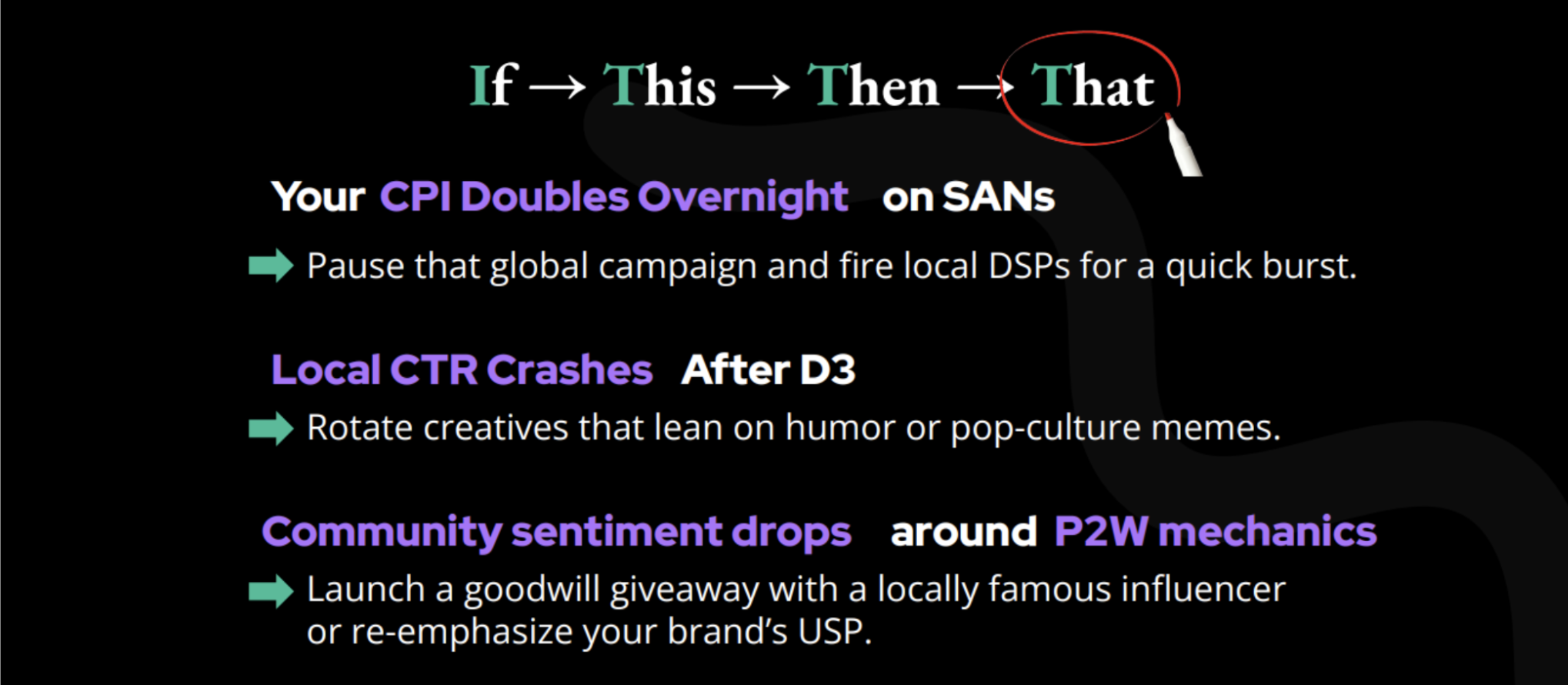
Examples:
- If CPI spikes overnight → temporarily shift spend to local DSPs
- If CTR collapses after Day 3 → rotate humor-based creatives
- If monetization sentiment drops → deploy goodwill campaigns with influencers
This approach allows UA teams to respond faster than sentiment spreads.
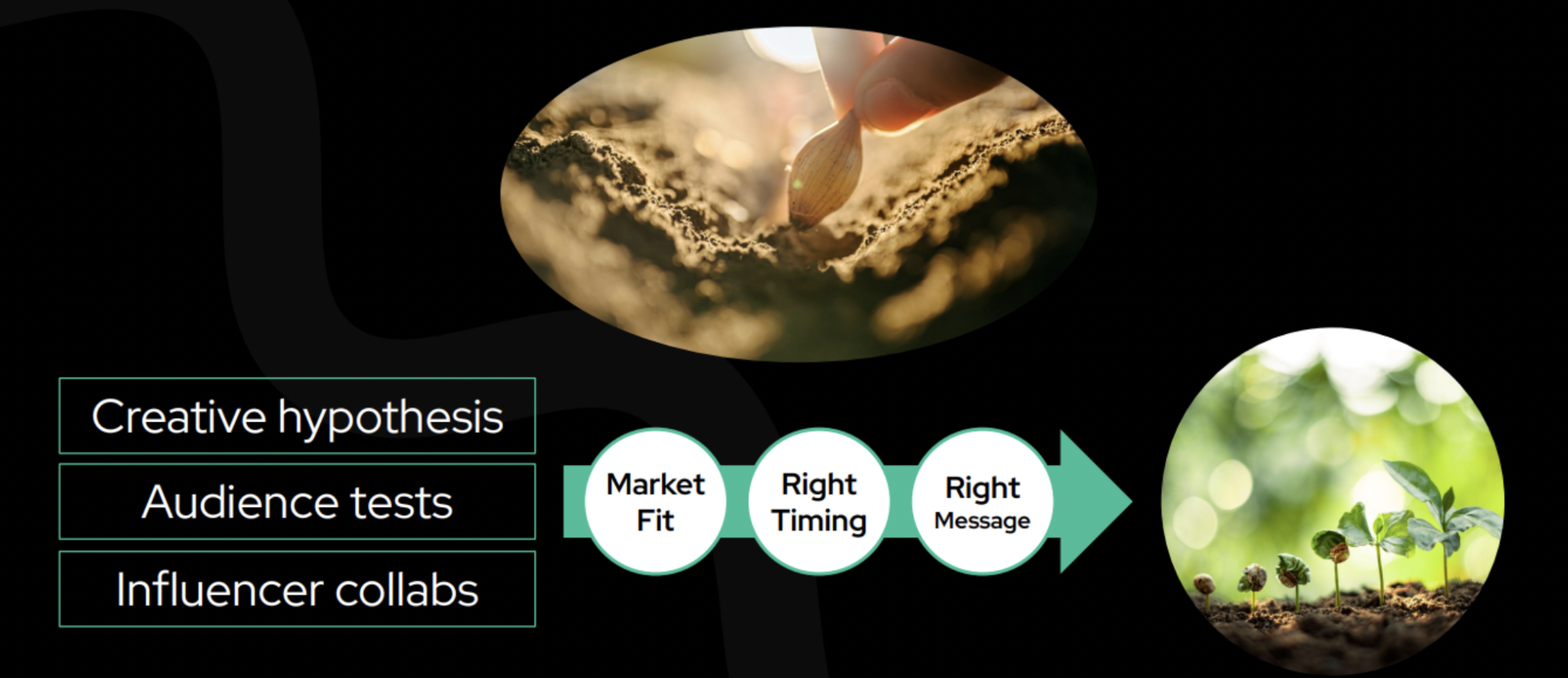
Final Thought: UA Is Farming, Not Gambling
Sustainable UA growth is rarely about one perfect campaign.
It comes from continuously testing creative hypotheses, audiences, and partnerships until the right combination of message, timing, and market fit appears.
Korea may be one of the most demanding gaming markets in the world, but it also offers one of the clearest lessons:
The closer your UA strategy aligns with player culture, the faster your growth compounds.







Home of the Gamesforum events series and leading mobile game analysis. Discover everything you need to know about mobile games marketing and monetization.