Together Towards Tomorrow: How Games District Is Approaching Long-Term Growth
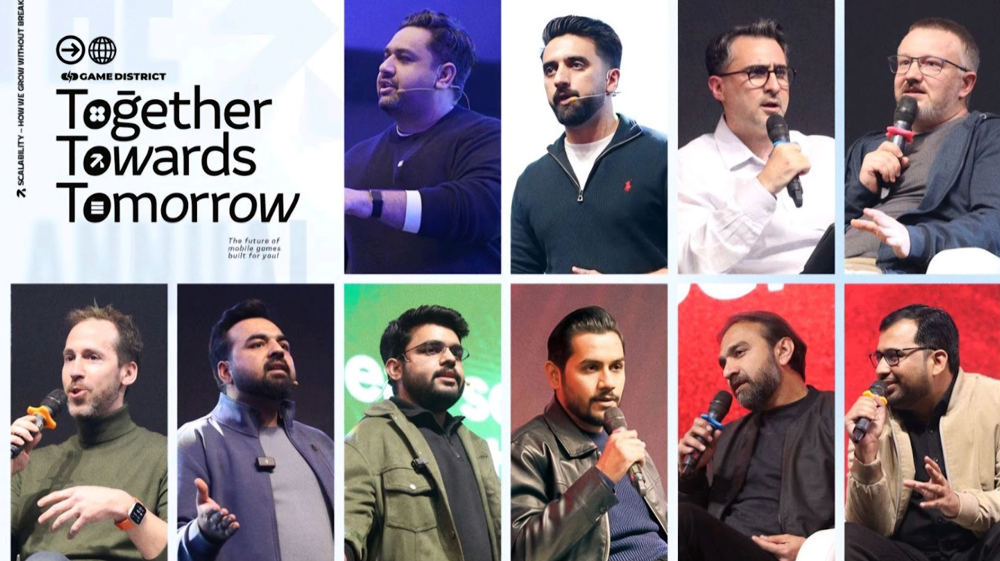
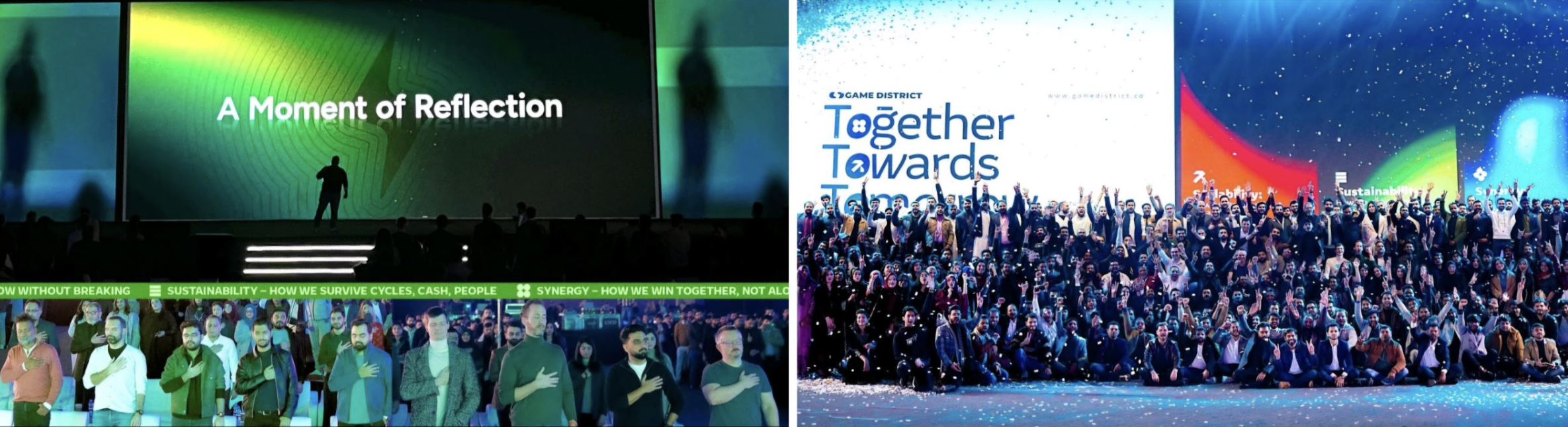
“Together Towards Tomorrow” is an event by Games District and is one of the core ideologies that defines the company. It speaks to our belief that the biggest achievements are never the result of individual effort alone, but of a collective vision pursued with unity, trust, and shared ambition. More than just a phrase, it captures the spirit that keeps Game District growing, evolving, and reaching higher with every step forward.
After years of learning how to scale games, Game District is now focused on a harder challenge: scaling a company that can keep winning through stronger teams, sustainable systems, and growth that does not come at the cost of identity.
In mobile gaming, growth is often described in numbers. Downloads. Revenue. Retention. DAU. They matter, of course. They tell you whether the machine is moving. But eventually every company reaches a point where numbers alone stop explaining the whole story. The more interesting question becomes: what is the company actually becoming as it grows?
That is the question we have been thinking about deeply at Game District.
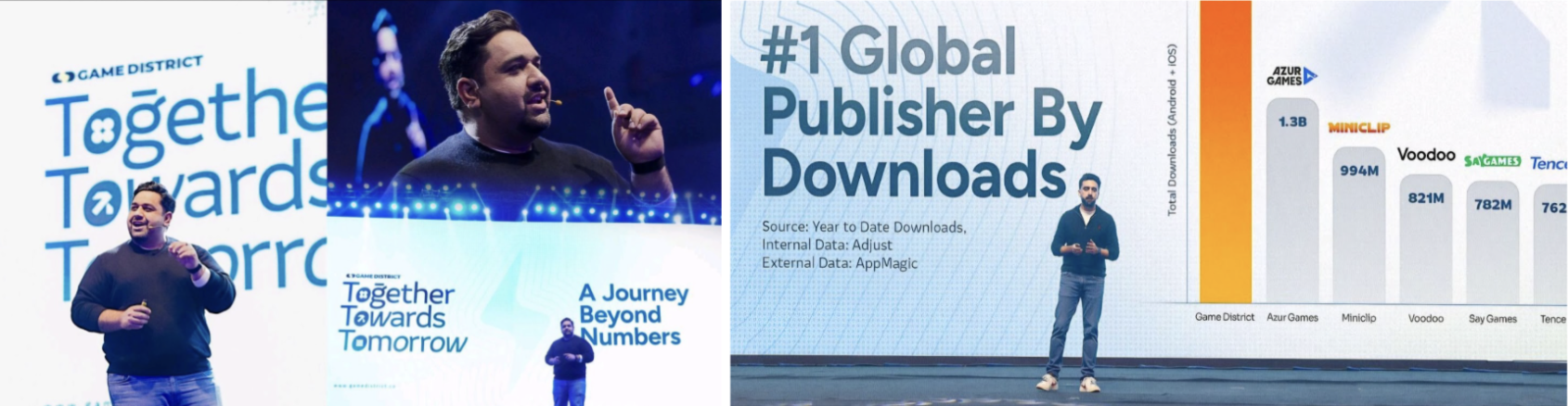
The last few years have taught us how to build scale. We learned it through repetition, through hard decisions, through failed prototypes, and through the discipline of operating in a market that does not forgive confusion for very long. We learned that success is rarely a single breakthrough. More often, it is the outcome of hundreds of small improvements compounding over time.
But if the first chapter of our journey was about proving that we could scale, the next chapter is about something more important: proving that we can scale in a way that lasts.
“That is what “Together Towards Tomorrow” means to us. Together Towards Tomorrow is not just a company, not a team, its the people, its the dreams we see together and its the fights we fight together.” said Saad.
It is not just an internal theme or a line meant for a stage backdrop. It is a direction. A reminder that the future we want to build will not come from speed alone, and it will not come from individual brilliance in isolation. It will come from the quality of the systems we build, the trust we create between teams, and the kind of environment we give people to do meaningful work.
For us, that direction rests on three ideas: Synergy, Sustainability, and Scalability. These are not abstract values sitting on a presentation slide. They are increasingly becoming the way we think about how Game District should grow from here.
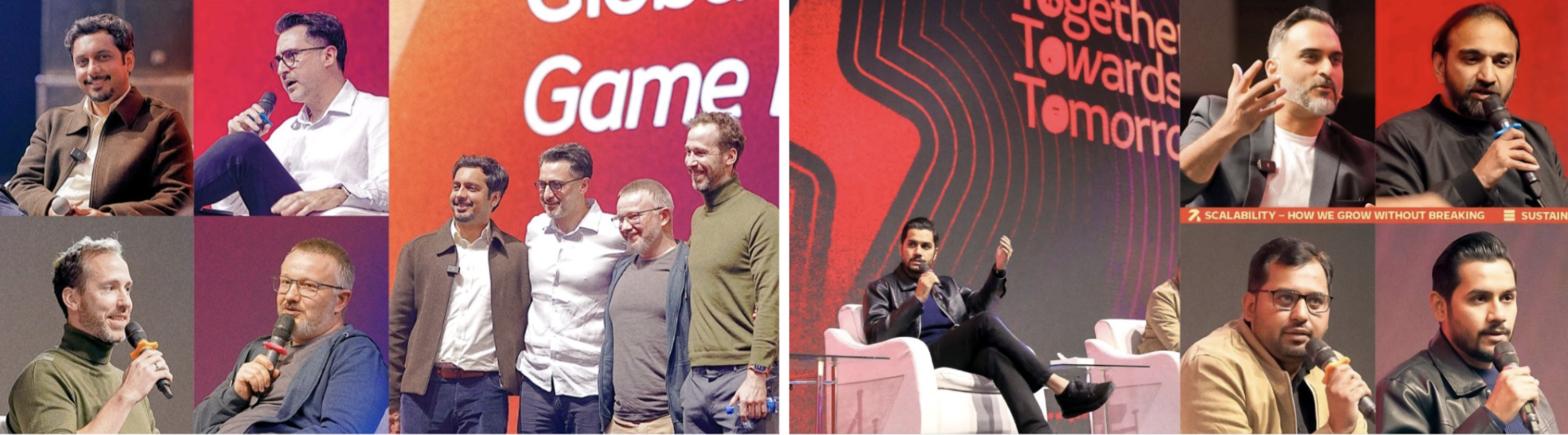
SYNERGY
Synergy comes first because no company wins for long when knowledge stays trapped in silos. In fast-moving businesses, teams can easily become islands. One studio solves a problem that another is still struggling with. One function sees a pattern that never reaches the product. One leader makes a hard-earned discovery that remains local instead of becoming institutional. Over time, those gaps become expensive.
We have learned that shared momentum is far more powerful than isolated excellence. The real advantage is not simply having talented people. It is creating a company where talented people can build on one another’s work. That means stronger collaboration between studios and central functions. It means giving teams local ownership while making sure learning travels across the organization. It means building a culture where asking for help is not seen as weakness and where good ideas are not judged by where they came from.
When synergy is real, companies move differently. Decisions become sharper because they are informed by more than one viewpoint. Execution becomes faster because teams do not have to relearn the same lessons from scratch. Morale becomes stronger because people feel they are part of something larger than their immediate output. And perhaps most importantly, ambition becomes more believable, because it is supported by collective capability rather than individual heroics.
SUSTAINABILITY
In our industry, this word is often reduced to one thing: financial discipline. That matters to us deeply. We have grown with a strong bias toward capital efficiency, operational honesty, and building with intention rather than excess. In a volatile market, those habits are not optional. They are survival skills.
But sustainability is also about people. A company cannot call itself durable if it can survive market cycles but cannot retain trust, energy, or belief internally. Sustainable growth means creating a place where people can keep growing without burning out, where leaders are developed instead of improvised, and where the organization becomes more resilient as it becomes more ambitious.
For Game District, that means thinking beyond short-term wins. It means asking whether our structures help people do great work consistently. It means making room for development, clarity, ownership, and better communication. It means recognizing that culture is not separate from performance. Culture is what performance rests on when pressure rises.
This is especially important for a company like ours, built across multiple locations and shaped by different creative energies. If the future is going to be larger than the present, then alignment cannot depend on proximity alone. It has to be designed. People need shared context, shared standards, and shared belief in where the company is heading. Otherwise growth creates distance instead of strength.
SCALABILITY
This may be the one most companies think they understand too early. Growth looks exciting from the outside, but inside a company it can expose every weak system at once. Communication breaks. Decision-making slows. Quality becomes uneven. New layers appear without clear purpose. What once felt agile starts feeling fragile.
Scalability, to us, is not about becoming bigger at any cost. It is about growing without breaking. It is about building structures that can carry more weight without losing speed, clarity, or creative edge. It is about having the discipline to evolve the company before the cracks become visible.
That means investing in better ways of working, not just asking people to work harder. It means sharpening the relationship between studios and central teams. It means designing processes that support creativity instead of choking it. It means building leadership depth so that progress does not depend on a few people carrying too much for too long.
And it means remembering that scale is not only a business outcome. It is also a responsibility. The larger the company becomes, the more intentional it has to be about what it protects. Its standards. Its learning culture. Its identity. Its ability to make talented people feel that they are building something with meaning, not simply feeding a machine.
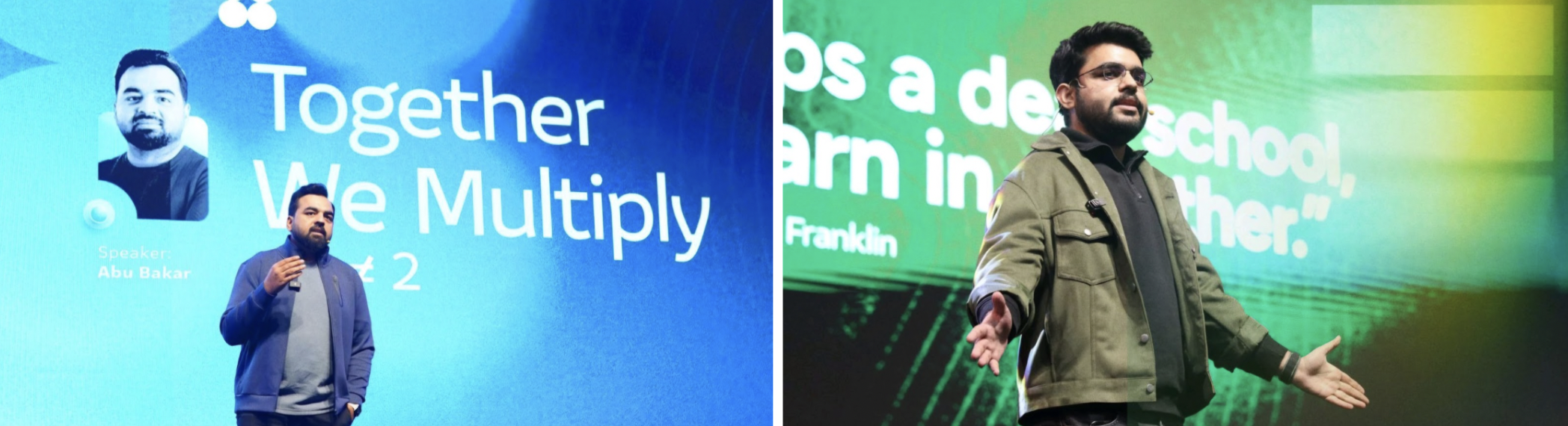
What excites us most about this stage of Game District is that it asks more from us than rapid growth ever did. It asks us to become excellent not only at building and scaling games, but at building and scaling an organization worthy of the people inside it.
That is a different kind of challenge. It is slower in some ways. Deeper in others. It requires more listening, more maturity, and more honesty. But it is also where the most meaningful long-term advantage is created.
Because the truth is that the next level of growth will not be unlocked by volume alone. It will be unlocked by better alignment. Better judgment. Better leadership. Better systems. And above all, by people who feel connected to a shared future they genuinely want to help build.
Game District has already shown that a company built from this region can compete on a global stage with discipline and ambition. The opportunity now is even bigger: to show that it can keep evolving without losing the qualities that made it work in the first place.
That is what tomorrow means to us. Not just more scale, but better scale. Not just more talent, but stronger teams. Not just more momentum, but momentum that can endure.
And the only way to get there is the way we believe enduring things are always built: TOGETHER.
You might also like






Home of the Gamesforum events series and leading mobile game analysis. Discover everything you need to know about mobile games marketing and monetization.