Game District’s CEO on the Long Road to 5 Billion Cumulative Downloads — and Why It Was Worth It
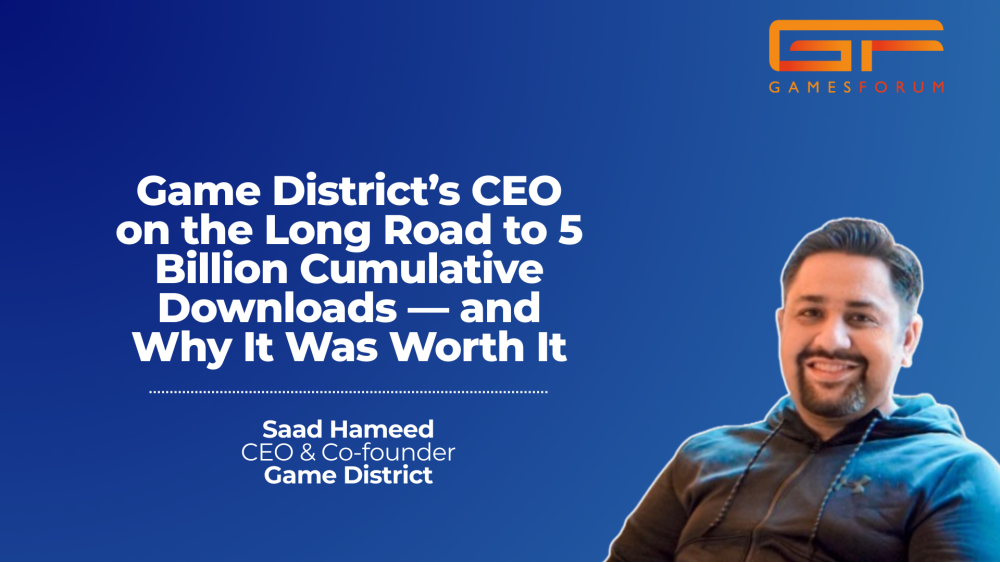
After building more than 500 games and scaling to 27 million daily active users, Game District’s CEO and Co-founder, Saad Hameed, reflects on why overnight success in mobile gaming is a myth — and how investing in people helped a MENAP-based publisher scale globally.
Behind Game District’s rapid global scale is a decade of failed games, disciplined execution, and a belief that culture and people — not just metrics — determine whether growth truly lasts.
Reaching a whooping 5 billion downloads cumulatively (2.2 billion in 2025) and 27 million peak daily active users is a milestone we’re genuinely proud of at Game District. But milestones, by their nature, only capture outcomes — not the years of iteration, failure, and persistence that make those outcomes possible.
In mobile gaming, success often looks sudden from the outside. Inside the company, it almost never is. What’s commonly labeled “overnight success” is usually the result of years of missed shots, uncomfortable lessons, and repeated experimentation.
For us, that journey involved building and testing more than 500 games. Most of them didn’t scale. Many failed fast. A few worked just well enough to teach us what not to do next. And a very small number went on to become global titles.
Failure was the curriculum, not the cost
From the beginning, Game District was designed around execution speed and learning velocity. We built fast, tested globally, and killed ideas early — not because speed guarantees success, but because it shortens the distance between assumption and truth.
Every failure left something behind: clearer retention signals, better monetization timing, sharper insight into when user acquisition efficiency breaks, or a deeper understanding of how players behave once novelty fades. Over time, those lessons added up to something more valuable than any single hit — sound judgment.
As the mobile gaming market matured, that judgment became essential. With global downloads flattening and acquisition costs rising, scale today isn’t about shipping more games. It’s about making fewer, smarter decisions — and making them consistently.
Being bootstrapped forced us to be honest
Game District has remained largely bootstrapped, funding growth primarily through operating cash flows rather than aggressive external capital. That choice brought pressure, but it also created clarity.
If user acquisition didn’t pay back, it stopped. If a feature didn’t improve retention, it was cut. If complexity didn’t earn its place, it didn’t ship. In 2025, that discipline showed up clearly: 55% year-over-year revenue growth, alongside 35% growth in downloads.
Bootstrapping didn’t make scaling easier. But it made it intentional — and sustainable.

Scaling is a people problem before it’s a product problem
As companies grow, metrics naturally get louder. Charts become easier to celebrate than teams. But metrics don’t build companies, people do.
One of the most important lessons we learned is that hiring the right people matters more than moving fast. At scale, the wrong hire doesn’t just slow execution — they introduce noise into decision-making. The right hire brings clarity, trust, and long-term thinking.

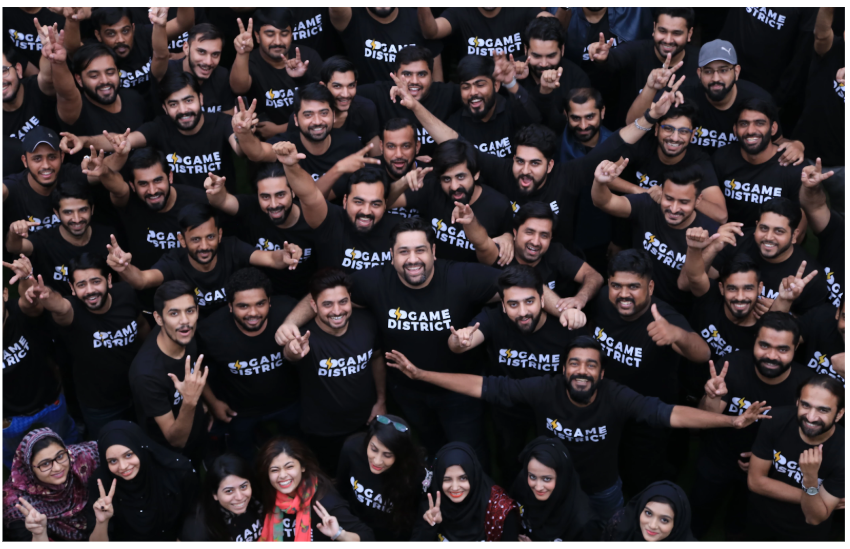
Operating across Lahore, Istanbul, and Dubai, we’ve focused on giving teams local creative ownership while centralizing product strategy, analytics, monetization, and user acquisition. That balance only works when teams feel trusted — and when they’re encouraged to challenge ideas, kill weak concepts early, and take ownership beyond execution.
Moving beyond hyper-casual toward durability
Hyper-casual games powered our early momentum, but they were never meant to be the final destination. Today, we’re shifting deliberately toward hybrid casual and hybrid simulation products designed for longevity.
Our recent launches in these categories are showing 16% Day-30 retention, nearly double category benchmarks. That progress didn’t come from chasing trends. It came from slowing down, listening more carefully to players, and building systems that support long-term engagement — not just short-term spikes.

What the numbers leave out
5 billion downloads is a staggering outcome. So are 27 million daily active users.
What those numbers don’t show are the hundreds of failed prototypes, the teams who improved systems instead of chasing credit, and the discipline required to scale responsibly from MENAP to a global audience.
We’ve shown that a MENAP-built publisher can compete on the world stage with consistency and rigor. The opportunity ahead is even bigger: to build products players return to for years, to create environments where talent grows, and to prove that sustainable scale is possible without losing identity.
This milestone isn’t a finish line. It’s a foundation.
And from here, we’re aiming higher — with the same curiosity, discipline, and belief in people that brought us this far.
Because in the long run, numbers open doors. Teams build what comes next.

You might also like











Home of the Gamesforum events series and leading mobile game analysis. Discover everything you need to know about mobile games marketing and monetization.