HyperBeard on building a global games company from Mexico
In a market obsessed with scale, monetisation and the next big genre, HyperBeard has built a sustainable business on something far simpler: games that make people feel good. We spoke to CEO Alex Kozachenko about stumbling into a niche, thinking globally from day one, and why comfort travels across borders.
Cute-casual games are often treated as a soft corner of the mobile market, pleasant but not strategic. HyperBeard’s track record suggests otherwise. The Mexico-based developer and publisher has turned cosy, character-led titles into a recognisable identity and a durable business.
“HyperBeard is a mobile game developer and publisher based in Mexico,” says Kozachenko. “We’re best known for cute, cozy games like Adorable Home, Pocket Love, and Meow Tower.”
Building from the business side
Unusually for a studio known for its creative identity, HyperBeard’s CEO came to games through commerce rather than development. That shaped the company’s early priorities: sustainability first, experimentation second.
“We started HyperBeard back in 2017 with a small team and a pretty simple goal: make little games and build a sustainable business,” Kozachenko explains. “We experimented a lot, figured out what worked, started building bigger games, and continued from there.”
It’s a model many smaller studios would do well to consider. Rather than betting everything on one ambitious launch, HyperBeard used small, fast projects to learn what its audience wanted, then scaled what worked.
Finding a niche by listening
HyperBeard didn’t set out to own the cute-casual space. It found it.
“It happened pretty organically,” says Kozachenko. “It started randomly with a game called KleptoCats. It turned out there was a huge audience that loved cute, relaxing experiences. Once we saw that, we leaned into it.”
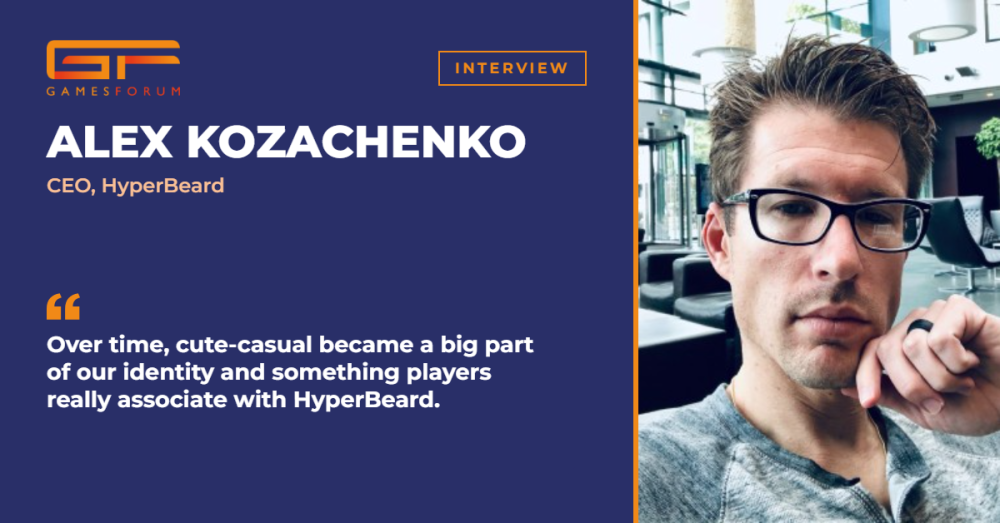
The lesson here isn’t about cats. It’s about responsiveness. When a game resonated with an underserved audience, the team didn’t treat it as a one-off hit; they treated it as a signal. “Over time, cute-casual became a big part of our identity and something players really associate with HyperBeard.”
Why comfort is universal
Much of the industry conversation focuses on depth, competition and retention mechanics. HyperBeard’s success points to a different lever: emotional accessibility.
“I think there’s something universal about cute, comforting experiences,” Kozachenko says. “You don’t need to be a hardcore gamer or even speak the same language to enjoy them.”
That universality is a commercial advantage as much as a creative one. Games that need little explanation and no cultural translation can travel further and faster. As Kozachenko puts it, they’re “easy to pick up, relaxing, and give players these little worlds they can get attached to.” Attachment, in turn, is what keeps players coming back.
Thinking globally from Mexico
Building a games company outside the industry’s traditional hubs brings both pressure and opportunity. For HyperBeard, a small domestic market meant there was never an option to think local.
“Being in Mexico meant we had to think globally from day one,” says Kozachenko. “We’ve got some incredibly talented and creative people here, which has been a huge advantage.”
The trade-off is an ecosystem still finding its feet. “The challenge has been that the local games industry is still relatively young, so finding experienced talent and building industry connections hasn’t always been easy.”
It’s a familiar story for studios in emerging markets, and HyperBeard’s growth is a useful proof point that strong creative talent and a global mindset can outweigh the lack of an established local scene.
What’s next: bigger, not different
HyperBeard’s next chapter is about scale rather than reinvention.
“More of what we do best, but on a bigger scale,” says Kozachenko. “We’re growing our free-to-play business, working with some really exciting IP, and expanding our partnerships with platforms like Apple Arcade and hopefully others.”
Platform partnerships and licensed IP could take HyperBeard’s brand of comfort to new audiences, but the core philosophy remains unchanged. “The focus is still on making games and brands people love.”
The takeaway
HyperBeard’s story challenges the idea that cute-casual is a lightweight category. By listening to its audience, building sustainably and designing for universal appeal, the studio has turned comfort into a competitive advantage, and shown that a global games business can be built from anywhere.



Home of the Gamesforum events series and leading mobile game analysis. Discover everything you need to know about mobile games marketing and monetization.