Playable Ads Playbook for 2027: AI, Depth and the Race for Creative Scale
In the not too distant past, playable ads were an experiment that studios would put a portion of their budget behind. This has now changed dramatically.
Playable ads are becoming an increasingly important part of mobile games user acquisition, but as production becomes faster and more accessible, the challenge is shifting from simply making playables to making playables that deliver meaningful player experiences.
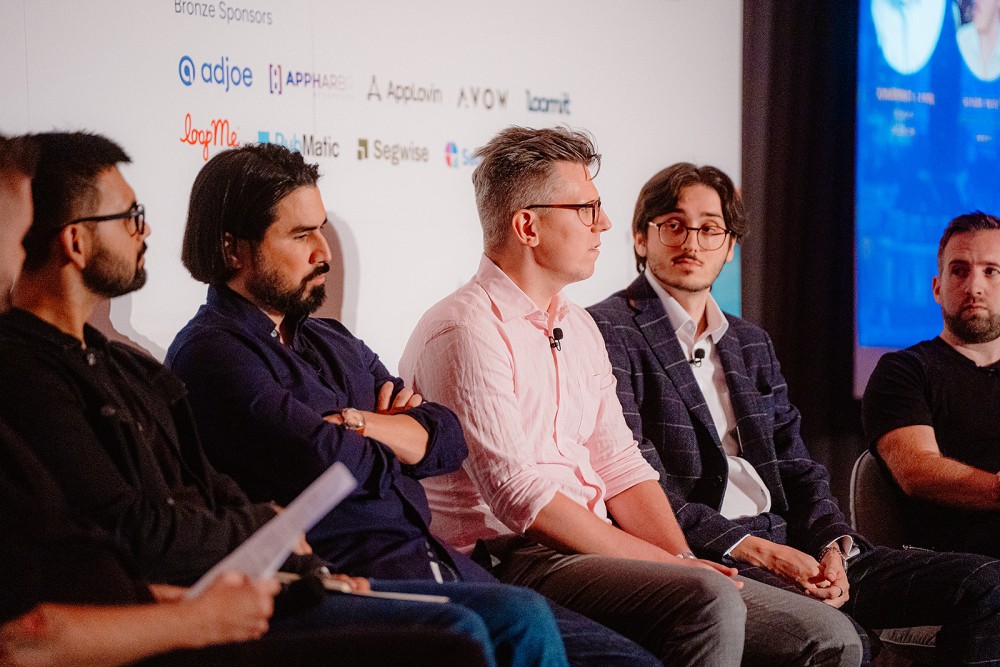
That was a key theme at Gamesforum London 2026, where industry experts from Zynga, Kwalee, BoomBit, Reactionional Music and Segwise discussed how playable advertising is evolving, the role AI is playing in production, and what studios need to consider as they look towards 2027.
Playables are moving from experiment to core UA strategy
The adoption of playable ads has grown significantly in recent years. As competition increases and advertising platforms demand greater creative variety, studios are under pressure to produce more assets while maintaining performance.
For Robert Hoeft, Head of Playable Ads at BoomBit, the question has already shifted.
“Two years ago, the question was more like if we should use playables. Now it's more like how we should do it effectively and efficiently. In terms of both performance and costs.”
Brijesh Bharadwaj, Co Founder of Segwise, highlighted just how quickly production volumes are increasing. According to data discussed during the panel, the proportion of new creatives produced as playables has risen substantially.
Brijesh highlighted that in the last four quarters of 2025, playables accounted for 10-15% of new creatives produced by studios using the format. That figure has since risen to 30% representing a 2-3x increase in just six months.
Additionally, production volumes have also increased significantly. Studios producing playables were creating an average of around 17 per quarter; that figure has now risen to 71. This is more than four times more than previously.
Looking at the broader picture however, only 13 to 15% of gaming studios are using playables. For smaller studios in particular, the cost and complexity of playable production can remain a barrier.
Playable ads require a combination of design, art and technical development, while assets must also work across different advertising networks. That complexity has historically pushed many studios towards specialist vendors.
The pressures are getting harder. Not only on a budget level but logistically, studios can find this challenging as well.
So, how can we challenge this?
AI is lowering the barrier to playable production
AI was arguably the biggest recurring theme of the discussion and its impact clearly varies studio to studio.
For Adam Watts, Playable Designer at Kwalee, AI is already helping bring playable development further in-house.
“I think there's obviously still challenges... But I think once you've got into the rhythm of it and you've got a few successful playables under your belt, it's easier to build onto them and create new creative tests.”
The panel agreed that AI can increase production speed and volume, but there was an important distinction between using AI to make more playables and using it to make better playables.
AI can help developers prototype ideas, create variations and produce more complex effects in less time. But creative strategy, game knowledge and an understanding of the player remain critical.
The technology may make production more efficient, but the creative thinking behind a successful playable cannot simply be automated away.
How much gameplay does a playable really need?
One of the biggest questions facing playable designers is how deep the experience needs to be.
The answer from the panel was simple: it depends on the game.
A playable does not necessarily need to recreate an entire game. Instead, it needs to deliver the core experience or “joy” of the product quickly enough for a player to understand what makes it worth downloading.
Robert Hoeft stated: ‘’It's never a simple answer because we've seen success with very long playables…But on the other hand, we've also seen very successful case studies with, for example, integral and much shorter narrative driven generated video playables where users can enjoy a story. It's more hook based and it still performs really well, but it's very game dependent.’’
For a match game, that moment might arrive after a single move. For a more complex puzzle or strategy experience, it could take longer.
The important point is that players need to experience the fundamental appeal of the game before being asked to install it.
Making a playable too simple can therefore be just as damaging as making it too complicated. If players do not experience the core appeal, the playable may generate installs without properly qualifying those users.
Authenticity matters more than ever
The panel also discussed the evolution away from the novelty-driven playable ads that once dominated mobile advertising.
Players are increasingly familiar with playable formats, meaning studios need to offer experiences that feel entertaining, authentic and connected to the actual game.
Adam Watts explained his experience in creating a new playable, and saw that one-click playables were performing well. However when replicated it did not give the same results. He saw that one-click concepts can sometimes go too far in simplifying the experience.
“There wasn't enough time for the player to actually build a meaningful connection with the experience to then want to go ahead and download it.”
That connection is particularly important when considering retention.
A playable should set an expectation that the actual game can fulfil. If the advertising experience promises something fundamentally different, the result may simply be churn after installation rather than genuine player acquisition.
As Robert Hoeft put it: ‘’The promise made in the playable ad must be matched in the product.”
Playable analytics are becoming more sophisticated
As playable production scales, measurement is also changing. Studios are increasingly able to analyse what happens inside the playable rather than simply looking at the final install or campaign-level results.
That opens up the possibility of breaking a playable into individual components: the hook, headline, opening move, mechanics, objects, number of interactions and other creative variables.
Instead of asking whether one playable worked, teams can start asking why it worked.
Brijesh described this as moving towards a “Lego block” approach to creative analysis, where individual elements can be compared against performance data.
This could make playable optimisation increasingly similar to established video creative workflows. Rather than producing a playable and starting again from scratch, studios can identify which components are contributing to performance and rapidly produce new iterations around those findings.
Network differences remain important, however. A playable that performs strongly on one advertising network may not necessarily produce the same results elsewhere, making cross-network testing and benchmarking essential.
Designing for iteration from the beginning
One of the most interesting ideas from the panel was that studios should think about experimentation before production begins.
Rather than creating a finished playable and then trying to work out what worked, teams can build playables around predefined variables that can be changed quickly. These might include the opening mechanic, headline, background, objects or different hooks.
The result is a more modular approach to production, allowing teams to respond quickly when performance data reveals a promising direction.
This is particularly powerful for hybrid-casual games, where individual creative elements can be changed without rebuilding the entire experience.
The approach also reflects a broader shift in mobile UA: creative production is becoming increasingly data-driven, iterative and modular.
Scaling playables without losing creativity
As production volumes rise, studios face another challenge: how to scale without creating an endless stream of variations that add volume but little creative value.
Modular production is one solution. Studios can take successful concepts and change elements such as introductions, end cards, characters, themes or seasonal assets to create additional iterations.
However, the panel also highlighted the importance of knowing when to use external vendors and when to keep production in-house.
Craig Smith, Art Director at Zynga highlighted: ‘We're fortunate to have vendors with the customising tools to give video intros and tweak in cards and reskin assets for seasonality or themes or whatever it may be.So you can really maximise your volume out of that, which in the last quarter or two has been essential to us.’’
Vendors can help studios scale proven concepts and increase production capacity, while internal teams can be better positioned to experiment with completely new ideas and draw on their deeper understanding of the game.
Rather than viewing the two approaches as mutually exclusive, the panel suggested that a combination of internal and external production can provide both scale and creative diversity.
The next phase of AI: from volume to experimentation
The panel's discussion of AI ultimately pointed towards two different creative pipelines. One is focused on speed, automation and volume: rapidly responding to performance data and producing iterations based on what has already been shown to work.
The other is focused on genuinely new ideas.
As Brijesh explained, AI can be particularly useful when teams give systems a clear understanding of what constitutes an acceptable creative output.
“You’re transferring context... like you’re basically treating this system like a new hire who you’re bringing up to speed on what you already know.”
This could allow AI systems to work within a studio's existing creative guidelines while exploring a much larger number of possible combinations and variations.
At the same time, human creative teams remain important for developing ideas that do not yet exist in the data. That distinction could become increasingly important as AI makes playable production more accessible.
Robert Hoeft states: ‘’Now with AI, experienced teams can be really empowered to to quickly prototype some some new playable ideas and and run initial tests.’’
If everyone has access to the same production tools, simply being able to produce playables quickly will become less of a differentiator.
What will playable ads look like in 2027?
Playables could become more personalised, with branching experiences allowing users to take different paths based on their interactions.
There was also discussion of playables becoming increasingly close to the actual game experience, potentially reducing the distinction between an advertisement and a playable slice of the product.
For ad networks, better use of behavioural data could also be an important development. The interactions taking place inside a playable provide valuable signals about a potential player's interests and behaviour, but the panel suggested there is still significant room for that data to be better utilised.
Ultimately, the biggest change may not be the playable format itself, but how studios think about it.
Playable ads are moving beyond being an additional creative format and towards becoming a sophisticated testing environment for gameplay, creative concepts and player behaviour.
As production becomes cheaper and AI accelerates iteration, the competitive advantage will increasingly come from knowing what to test, why to test it and how to turn the resulting data into the next creative idea.
And while AI may make it easier than ever to create a playable, the panel's message was clear: making a playable is becoming easier. Making one that players genuinely want to play is still the real challenge.



Home of the Gamesforum events series and leading mobile game analysis. Discover everything you need to know about mobile games marketing and monetization.