The Global Ad Monetization Playbook
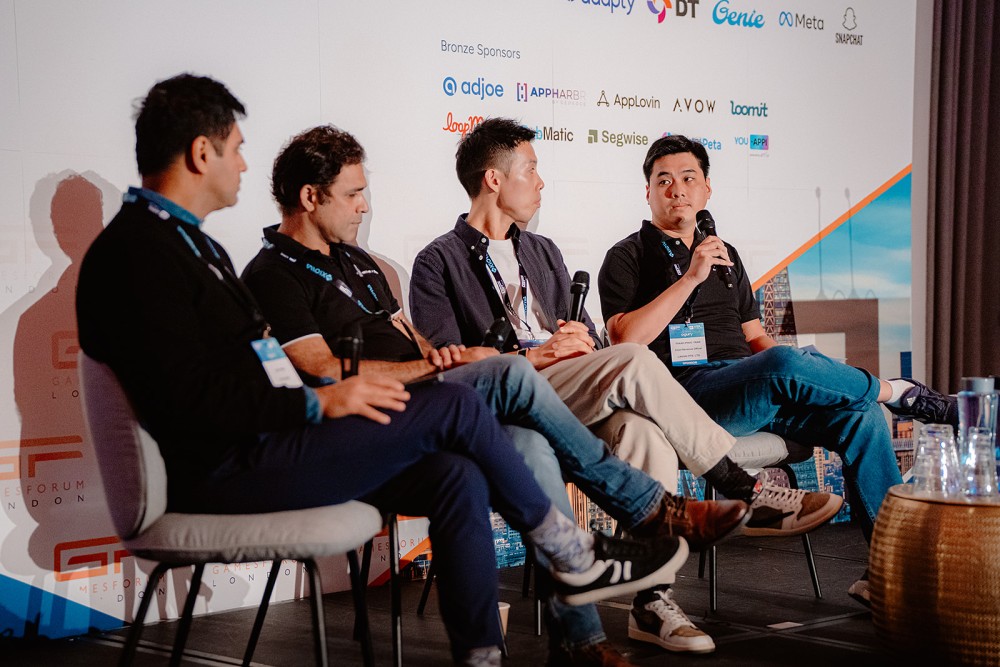
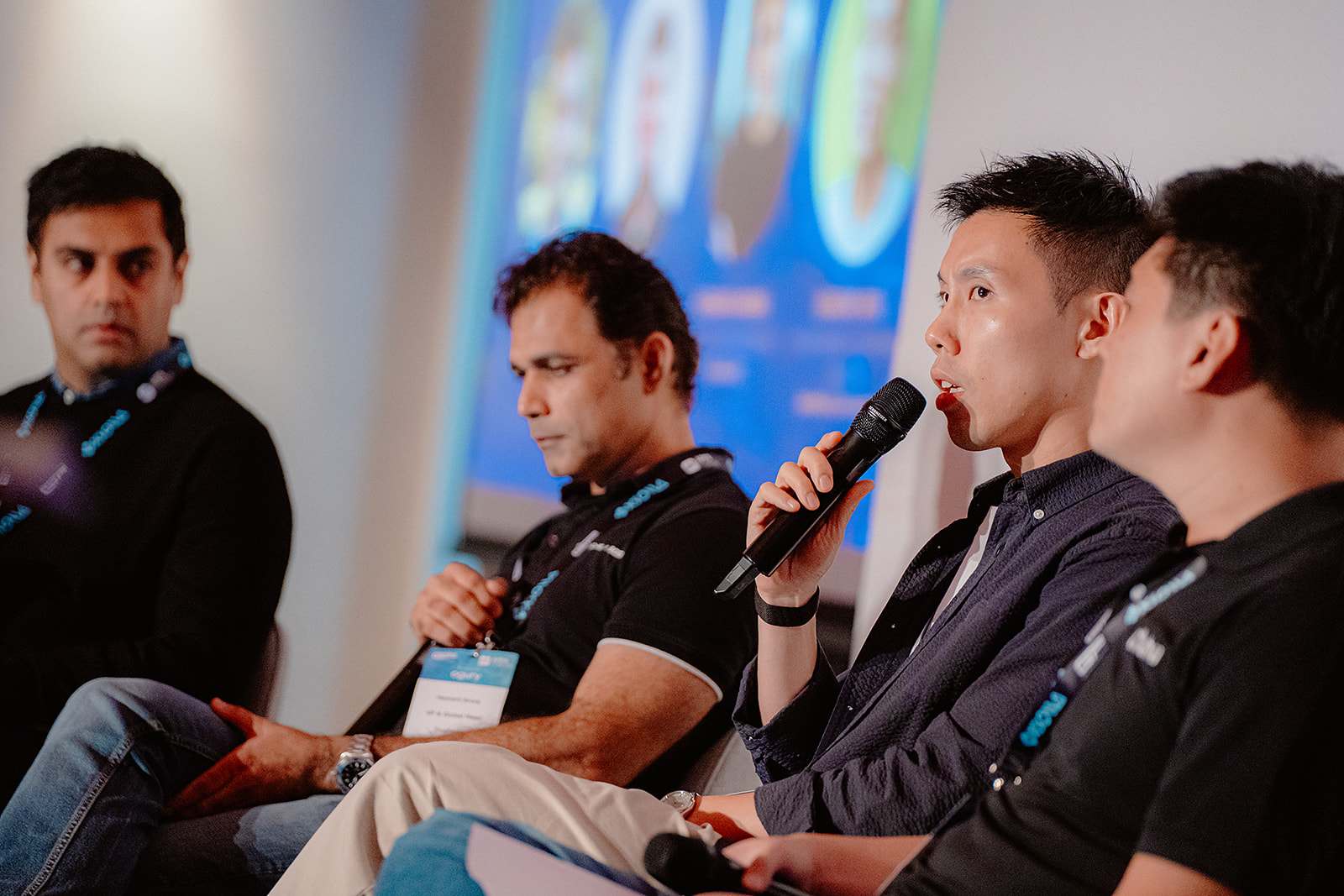
The Global Ad Monetization Playbook panel brought together Jaivir Nagi , Co-founder at Crackle Technologies, Hemant Arora, VP & Global Head Ads Business at Truecaller, Eugene S. Chief Marketing & Compliance Officer at Mavericks Link Limited; and PHUC TRAN, Chief Revenue Officer at Lihuhu Games.
Within this panel, leading publishers from across Asia-Pacific shared how they run their ad stacks, from segmenting users by acquisition channel to keeping “losing” A/B variants alive for months.
Global purpose, local value
For Hemant, whose app reaches around 500 million people, some things never change between markets. “Our purpose cannot be local,” he said. “If Truecaller’s purpose is to keep people safe while they’re communicating, it won’t change between India, Africa, Malaysia or the US.” The value of an impression is a different story. “The sweet spot is really about having a global infrastructure but having local intelligence in play.”
Eugene argued that bidding has removed much of the manual work, so the real gains now come from connecting monetization to user acquisition. He has restructured his team, so ad monetization managers are involved in UA. “It’s basically a closed loop. You have to know which users, which channel you’re trying to acquire from.”
His example: the US and Japan have similar ARPDAU, but “the user value in Japan drops much more significantly after 14 days than in the United States.” That means setting different floors across a user’s lifetime, not just by country and format. “Things are getting more 3D, more complex.”

Segment by channel
Phuc’s biggest recent win came from segmenting users acquired through rewarded channels and giving them a more aggressive ad experience, with higher frequency and no capping. Users from other sources get a more conservative approach balanced with IAP offers.
Eugene agreed, admitting an early assumption had been wrong. He once limited banners and refresh rates for high-value users acquired from video channels, expecting better retention. It didn’t help. Those users, he explained, “came over from a playable ad, spending a minute of time on ads before they installed.” His lesson: “Don’t make hypotheses.”
Hemant pushed segmentation beyond demographics to intent. On paper he fits the premium cohort for an iPhone ad. “But I have no intention of changing from Android to iPhone. Would I still be a premium customer for an iPhone?” And intent varies within markets too: “There are no two common consumers within a single country.”
The optimisations that paid off
Eugene’s advice was to go back to basics. Even on a sophisticated bidding setup, he found fill rates below 90% in some markets and formats and recovered revenue by backfilling unfilled rewarded impressions with other networks. “After bidding got more popular, people tend to rely on the automation,” he said, missing nuances where “you can easily uplift your entire revenue by 5%.”
Phuc’s team now uses multiple calls within mediation, with real-time floors at the request level. Eugene sees the wider industry heading the same way, with hybrid setups combining bidding and waterfall performing well.
Hemant’s experiment was commercial rather than technical: topping up the performance campaigns of Truecaller’s top ten advertisers with branding. As performance ads hit a ceiling, adding brand created “a beautiful mix of loyalty into transactions.” Early pitches were rejected, so Truecaller offered to invest on advertisers’ behalf, in exchange for an annual commitment if the test succeeded.
Don’t trust short-term A/B tests
Eugene tests the same change in two ways, through Firebase Remote Config and through a staged rollout on Google Play, as results
can differ. He also keeps the losing variant running on 5–10% of traffic for a month or two after a clear win. “When time goes by, you might forget this kind of test case.”
Phuc described tests that showed strong uplift for two weeks, then hurt engagement at 100%. His fix is a permanent holdout baseline to track long-term LTV. Hemant’s lesson was simpler: look at the data repeatedly, because “a lot of times you would say something’s failing” until a different view reveals the answer.
The metrics that matter
Hemant checks revenue three times a day across three lenses: core metrics such as fill rate, CPMs, CTR and CVR; bid behaviour, including bid density and bidders per impression; and supply. In advertising, he said, only two principles really work: how you control your supply, and how you influence bid behaviour.
Eugene has started tracking time spent in ads against session time. “Spending more than a minute on an ad is a little bit nonsense to me,” he said, noting some big publishers keep users in ads for three minutes at a time. High CPMs don’t justify it: “We all talk about LTV now.” Phuc tracks average ad duration by network and close rates and works with demand partners to protect the user experience.
One piece of advice
Asked for a single takeaway, Hemant urged publishers to “treat your partners as your customers,” bringing the same curiosity to understanding them as to understanding users. It’s a mindset he applies to his own audience too, constantly asking: “What do my consumers do when they’re not using my app? Are they thinking about me?”
Eugene took the long view. With US CPIs now reaching $10–15, he warned against monetizing users to the max in their early days, pointing out that some stay for 260 or even 720 days. The goal is to balance experience and return across that whole lifetime. Phuc brought it back to where users come from, since different sources mean different quality. “You need to be sophisticated,” he said.
It was a fitting note to end on. Across a messaging app and two puzzle game publishers, the panel kept returning to the same idea: bidding may have automated the auction, but the real gains now come from knowing your users, testing your assumptions, and playing the long game on lifetime value.



Home of the Gamesforum events series and leading mobile game analysis. Discover everything you need to know about mobile games marketing and monetization.