March’s top grossing and trending games

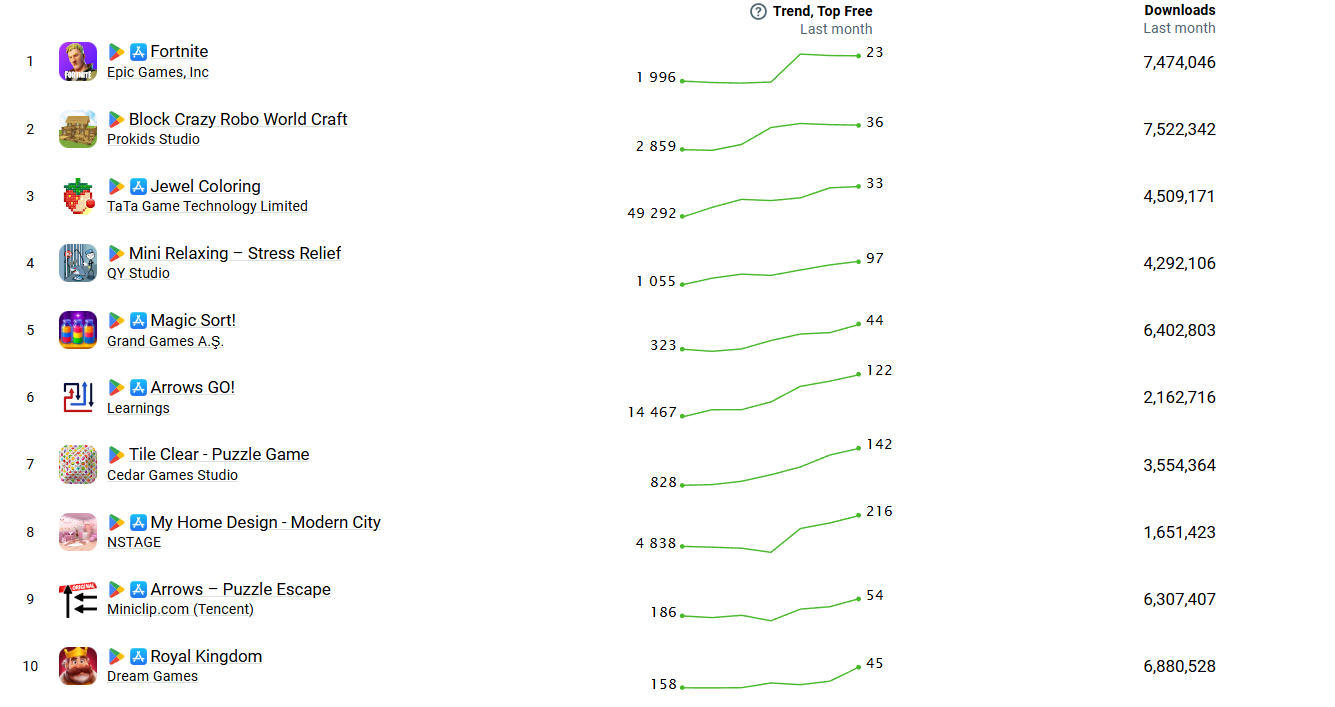
March doesn’t look “casual-first” so much as cadence-first. The Top Free chart leans on simple puzzle/relaxation titles that ship content fast and keep store pages fresh, anchored by a live platform title that signals weekly beats in its update notes.
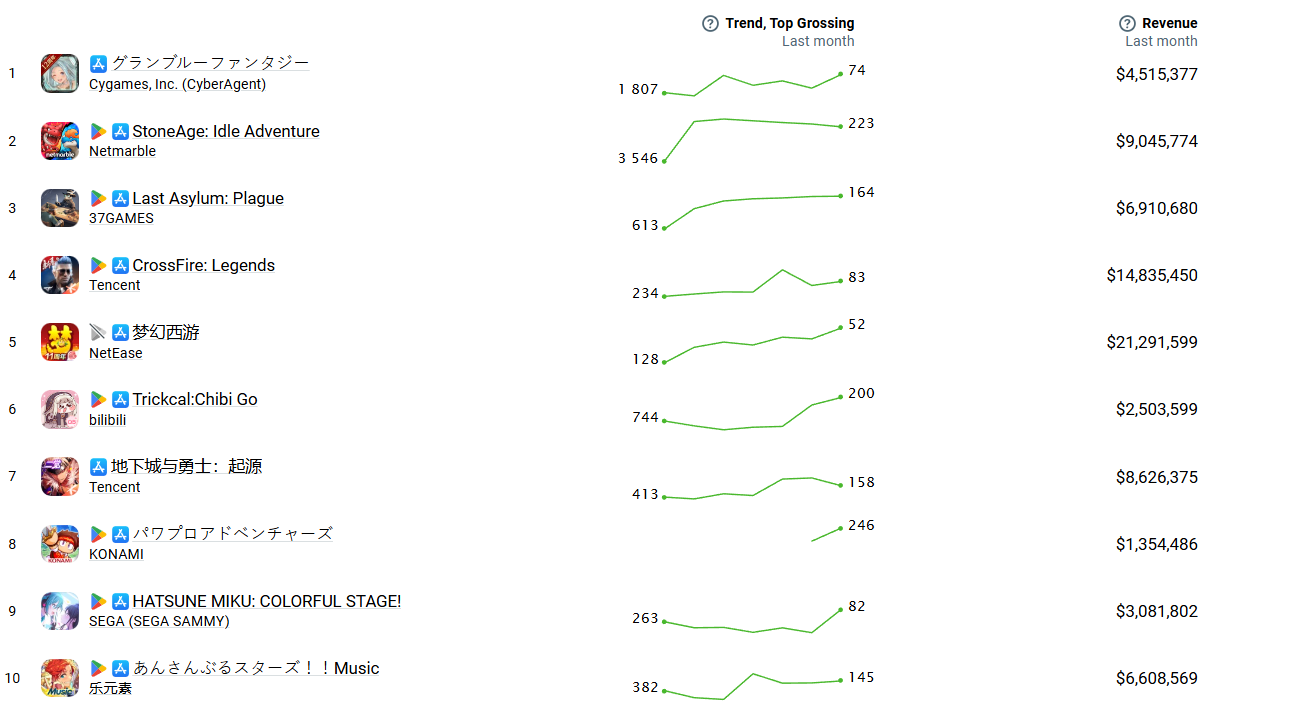
On monetization, March is clearer: the highest-grossing games are built around time-boxed incentives: battle passes, login ladders, anniversaries, “mandatory updates,” and pre-registration rewards that convert at launch.
Here are the winners.
Top free
Notable mentions
Fortnite - This one’s pretty straightforward. Epic isn’t just pushing updates, they’re turning them into events. Instead of “here’s a patch,” you get things like Wild Weeks with actual dates (March 5, March 12). That gives players a reason to come back now, not later.
At the same time, Epic Games is coming off major layoffs tied to declining engagement and rising costs, which makes this cadence feel less optional and more necessary.
Royal Kingdom - This is pure “level factory + seasonal wrapper” execution. Dream Games shipped a March update with a new district (Bamboo Workshop), 100 new levels, and a named seasonal layer (“Spring Collection”) with collectible rewards. Dream Games operates on a pipeline built for consistent level drops at scale.
Magic Sort! - This is cadence as a strategy. The March 18 update is straightforward: “New 100 levels.” No repositioning, no major feature shift, just continued expansion of the core loop. Grand Games positions this as a fast-scaling title, and the update rhythm reflects that. The key point is that frequent, clearly communicated level drops keep UA creatives valid (“new content available”) and prevent early churn, which supports steady download volume across the month.
Jewel Coloring - This reads like a structured content sprint rather than a single campaign. March updates stack in sequence: early-month level additions, mid-month gameplay expansion, and a late-month “Sprint to 1,000 Levels” milestone push. That final framing - explicitly naming a progression target - is doing the marketing work. The App Store identifies Ta Ta Game Technology Limited and flags ad-tracking categories, which aligns with an ad-driven scale model. The key point: repeated, quantified milestones create multiple re-entry moments across a single month.
Mini Relaxing - Stress Relief - This is a packaging play. “25 offline mini games” is the pitch, and it’s designed to maximise perceived value at install rather than depth post-install. Google Play flags “Contains ads,” which signals where monetization likely sits. The takeaway is that breadth reduces first-session drop-off, which is critical for ad monetization, and steady March updates keep the title visible in-store algorithms.
Tile Clear - Puzzle Game - The store description explicitly strips away complexity: no story, no theme, just levels. March timing reinforces that: a late-month update plus lightweight in-game events keeps the loop active without adding friction. The key point is that even “clean” puzzle titles now layer light live-ops elements to maintain engagement without compromising accessibility.
Top grossing
Notable mentions
グランブルーファンタジー (Granblue Fantasy) - This is a classic anniversary-driven monetization beat. Cygames framed March around the game’s 12th anniversary (March 10), with a pre-anniversary livestream on March 7 acting as the attention spike and a collaboration reveal layered on top. That’s a familiar structure: concentrate attention, then deploy limited-time banners and offers.
StoneAge: Idle Adventure - This is a textbook global launch conversion model. Netmarble publicly positioned March 3, 2026 as the worldwide release and stacked incentives immediately: draw tickets, premium currency, and structured login rewards. That’s not subtle: it’s a funnel designed to convert early engagement into spend.
CrossFire: Legends - This is monetizaion by schedule. The game pushes a seasonal battle pass alongside tightly defined reward windows (e.g. March 20–22 login events), which creates explicit time pressure. That’s a known pattern in competitive shooters. Corporate context: published under Level Infinite, part of Tencent. Short, time-boxed incentives plus premium tracks reliably pull spending forward.
梦幻西游 (Fantasy Westward Journey) - This is long-tail live service monetization at scale. NetEase continues to operate the title through dense event calendars, typically aligned with seasonal and regional beats, layered with cosmetics, progression systems, and value bundles. The key point is that entrenched live services don’t need spikes - they monetize through staying consistent.
地下城与勇士:起源 (Dungeon & Fighter Origin) - This is a reactivation-led revenue beat. A March update introduces returner incentives, progression shortcuts, and large reward drops designed to pull lapsed users back into the system quickly. Corporate context: operated by Tencent Mobile Games. The “catch-up fast” systems remain one of the most reliable ways to convert dormant players into spenders.
パワプロアドベンチャーズ (PowerPro Adventures) - This is a launch-week monetization spike. KONAMI positioned March 26 as the service start, supported by pre-registration rewards distributed at launch and a familiar franchise loop adapted into a new format.
HATSUNE MIKU: COLORFUL STAGE! - This is sustained by version cadence. A mandatory March update forces the active base onto a new build tied to upcoming events, songs, and campaigns, effectively resetting the engagement loop.
Marketing patterns worth noting
On the download side, March really hammers home how much this is now a production game. If you can reliably ship 100-level drops, milestone pushes, and keep your patch notes clear and readable, you can stay in the charts without needing big IP. Consistency is doing most of the work.
On the revenue side, it’s even more obvious what’s going on. The winners are all running tight calendars: launch events stacked with freebies, battle passes with premium tracks, forced updates, anniversaries, collabs. Everything is built around short, controlled windows where players are nudged to spend right now, not later.
You might also like











Home of the Gamesforum events series and leading mobile game analysis. Discover everything you need to know about mobile games marketing and monetization.